
Unlock On-Page SEO Success: The Power of Keyword Density, SEO-Friendly URLs, and More!

The Importance of Keyword Density in On-Page SEO Optimization
In the world of search engine optimization (SEO), there are many factors that contribute to a website’s success. From backlinks to meta tags, there are numerous strategies that can be implemented to improve a website’s ranking on search engine results pages (SERPs). However, two crucial elements that often get overlooked are keyword density and SEO-friendly URLs. These two components play a significant role in on-page SEO optimization and can greatly impact a website’s visibility and traffic.
Firstly, let’s define what keyword density and SEO-friendly URLs are. Keyword density refers to the percentage of times a targeted keyword appears on a webpage in relation to the total number of words. It is a measure of how often a keyword is used in a piece of content. On the other hand, SEO-friendly URLs are URLs that are structured and optimized for search engines to easily understand and index. They typically include relevant keywords and are concise and descriptive.
Now, you may be wondering why these two elements are crucial for on-page SEO optimization success. The answer lies in the way search engines, such as Google, rank websites. Search engines use algorithms to determine the relevance and quality of a website’s content. These algorithms take into account various factors, including keyword density and the structure of URLs, to determine a website’s ranking on SERPs.
One of the main reasons why keyword density is essential for on-page SEO optimization is that it helps search engines understand the topic and relevance of a webpage. When a search engine crawls a webpage, it looks for keywords to determine what the page is about. If a keyword appears frequently and naturally throughout the content, it signals to the search engine that the page is relevant to that particular topic. This, in turn, can improve the webpage’s ranking for that keyword.
However, it is crucial to note that keyword stuffing, which is the practice of overusing keywords in an unnatural way, can have a negative impact on a website’s ranking. Search engines are becoming increasingly sophisticated and can detect when keywords are being used excessively. This can result in penalties and a decrease in ranking. Therefore, it is essential to maintain a healthy keyword density that is natural and relevant to the content.
Similarly, SEO-friendly URLs also play a significant role in on-page SEO optimization. As mentioned earlier, search engines use algorithms to determine a website’s ranking. These algorithms also take into account the structure and relevance of a website’s URLs. By including relevant keywords in the URL, search engines can better understand the content of a webpage and rank it accordingly. Additionally, concise and descriptive URLs are more user-friendly and can improve the overall user experience, which is another factor that search engines consider when ranking websites.
Moreover, SEO-friendly URLs can also help with link building. When other websites link to your content, they often use the URL as the anchor text. If your URL contains relevant keywords, it can help improve the anchor text and, in turn, the link’s value. This can ultimately lead to an increase in website traffic and visibility.
In conclusion, keyword density and SEO-friendly URLs are crucial for on-page SEO optimization success. They help search engines understand the relevance and quality of a website’s content, which can greatly impact its ranking on SERPs. By maintaining a healthy keyword density and using SEO-friendly URLs, website owners can improve their website’s visibility, traffic, and ultimately, their online success. So, if you want to achieve success in the competitive world of SEO, make sure to pay attention to these two crucial elements.
How SEO-Friendly URLs Can Boost Your On-Page SEO Success
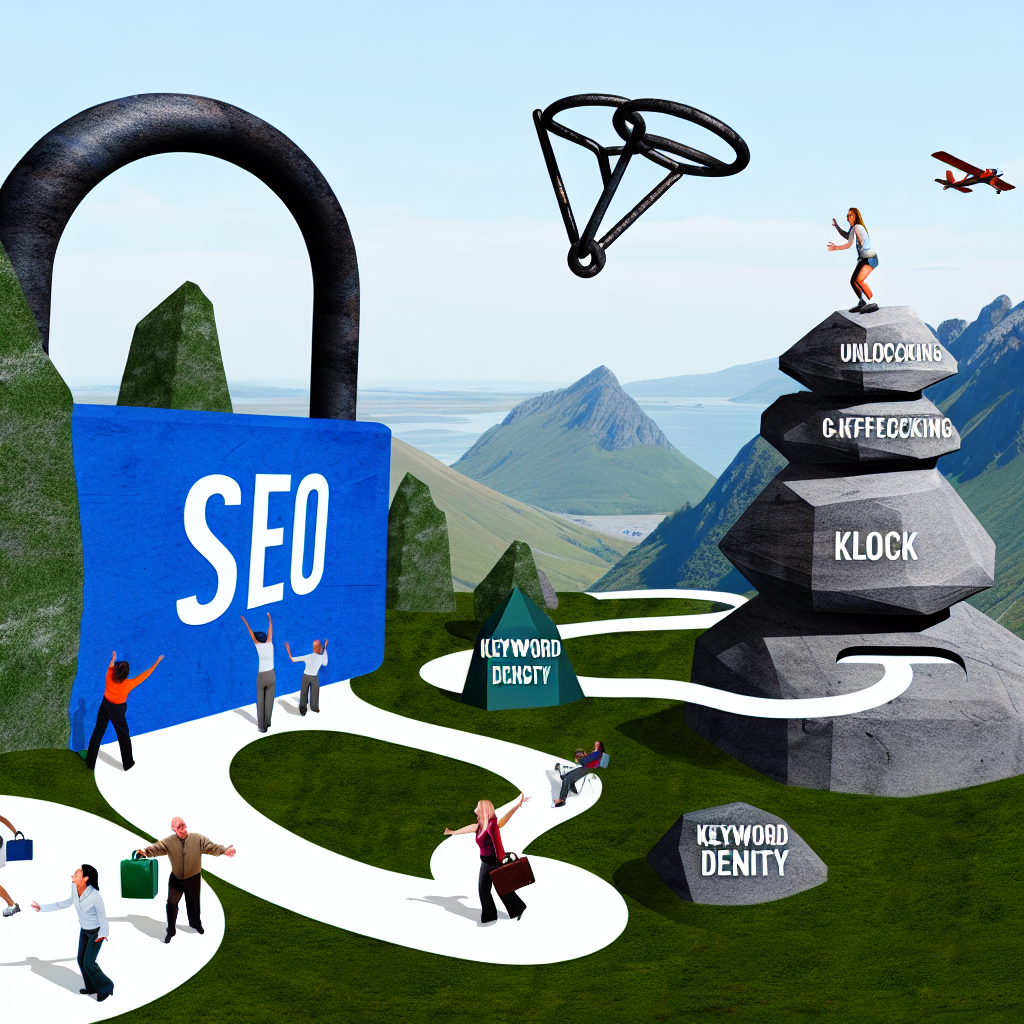
In the world of search engine optimization (SEO), there are many factors that contribute to a website’s success. From high-quality content to backlinks and meta tags, there are numerous strategies that can help a website rank higher on search engine results pages (SERPs). However, two often overlooked but crucial elements of on-page SEO optimization are keyword density and SEO-friendly URLs.
Keyword density refers to the percentage of times a targeted keyword appears on a webpage in relation to the total number of words. In the early days of SEO, keyword stuffing – the practice of overloading a webpage with keywords – was a common tactic used to manipulate search engine rankings. However, with the evolution of search engine algorithms, keyword density has become a more nuanced concept.
Today, keyword density is not about cramming as many keywords as possible onto a webpage. Instead, it is about strategically placing keywords in a natural and organic manner. This means using keywords in the page title, headings, and throughout the content in a way that makes sense and adds value to the reader. The ideal keyword density varies depending on the length of the content, but a good rule of thumb is to aim for a keyword density of 1-2% for shorter content and 2-3% for longer content.
So why is keyword density important for on-page SEO success? Firstly, search engines use keywords to understand the content of a webpage and determine its relevance to a user’s search query. By including targeted keywords in the right places, you are signaling to search engines that your content is relevant and valuable. This can help improve your website’s ranking on SERPs.
Moreover, keyword density also plays a role in user experience. When keywords are used naturally and in context, it makes the content more readable and engaging for the audience. This can lead to longer dwell times on your website, which is a positive signal to search engines that your content is valuable and should be ranked higher.
Another crucial element of on-page SEO optimization is the use of SEO-friendly URLs. An SEO-friendly URL is a URL that is structured in a way that is easy for both search engines and users to understand. This means using keywords in the URL and avoiding long, complicated strings of numbers and symbols.
An SEO-friendly URL not only helps search engines understand the content of a webpage but also makes it easier for users to remember and share the link. This can lead to more backlinks and social shares, which are important factors in search engine rankings. Additionally, an SEO-friendly URL can also improve the click-through rate (CTR) of your website on SERPs, as users are more likely to click on a link that contains relevant keywords.
When creating an SEO-friendly URL, it is important to keep it concise and descriptive. Avoid using stop words such as “the,” “and,” or “of,” and instead focus on including targeted keywords that accurately describe the content of the webpage. It is also recommended to use hyphens to separate words in the URL, as this makes it easier for search engines to read and understand.
In conclusion, keyword density and SEO-friendly URLs are crucial elements of on-page SEO optimization that should not be overlooked. By strategically using keywords and creating SEO-friendly URLs, you can improve your website’s ranking on SERPs, enhance user experience, and ultimately drive more traffic to your website. So the next time you are optimizing your website for SEO, remember to pay attention to these often overlooked but essential elements.
Maximizing On-Page SEO with Internal Linking, Meta Tags, and Image Alt Text
In the world of search engine optimization (SEO), there are many factors that contribute to a website’s success. From backlinks to content quality, there are numerous strategies that can be implemented to improve a website’s ranking on search engine results pages (SERPs). However, two crucial elements that often get overlooked are keyword density and SEO-friendly URLs. These two components play a significant role in on-page SEO optimization and can greatly impact a website’s visibility and traffic.
Firstly, let’s define what keyword density and SEO-friendly URLs are. Keyword density refers to the percentage of times a targeted keyword appears on a webpage in relation to the total number of words. It is a measure of how relevant a webpage is to a particular keyword or topic. On the other hand, SEO-friendly URLs are URLs that are structured in a way that is easy for search engines to understand and index. They typically include relevant keywords and are concise and descriptive.
Now, you may be wondering why these two elements are crucial for on-page SEO optimization success. The answer lies in the way search engines, such as Google, rank websites. Search engines use complex algorithms to determine the relevance and quality of a webpage. Keyword density and SEO-friendly URLs are two factors that these algorithms take into consideration when ranking a website.
Let’s start with keyword density. When a search engine crawls a webpage, it looks for keywords and phrases that are relevant to the search query. If a webpage has a high keyword density for a particular keyword, it signals to the search engine that the webpage is highly relevant to that keyword. However, it is essential to note that keyword stuffing, which is the practice of overusing keywords in an attempt to manipulate search engine rankings, can have a negative impact on a website’s ranking. Therefore, it is crucial to maintain a healthy keyword density that is natural and not forced.
Moving on to SEO-friendly URLs, they play a crucial role in helping search engines understand the content of a webpage. When a search engine crawls a webpage, it looks at the URL to determine what the page is about. A concise and descriptive URL that includes relevant keywords can help a webpage rank higher for those keywords. Additionally, SEO-friendly URLs are also more user-friendly, making it easier for visitors to understand the content of a webpage just by looking at the URL.
In addition to keyword density and SEO-friendly URLs, there are other on-page SEO optimization techniques that can greatly impact a website’s ranking. One of these techniques is internal linking. Internal linking refers to the practice of linking to other pages within the same website. This not only helps visitors navigate through the website but also helps search engines understand the structure and hierarchy of a website. When done correctly, internal linking can also help distribute link equity throughout the website, improving the ranking of all pages.
Another crucial on-page SEO optimization technique is the use of meta tags. Meta tags are snippets of text that provide information about a webpage to search engines. The two most important meta tags are the title tag and the meta description. The title tag is the title of a webpage that appears on the SERPs, while the meta description is a brief summary of the webpage’s content. Including relevant keywords in these meta tags can greatly improve a webpage’s visibility and click-through rate.
Lastly, optimizing image alt text is another important on-page SEO technique. Alt text is the text that appears when an image cannot be displayed. Search engines use alt text to understand the content of an image, and including relevant keywords in alt text can help improve a webpage’s ranking for those keywords.
In conclusion, keyword density and SEO-friendly URLs are crucial for on-page SEO optimization success. They play a significant role in helping search engines understand the relevance and quality of a webpage. Along with other on-page SEO techniques such as internal linking, meta tags, and image alt text, they can greatly impact a website’s ranking and visibility on search engine results pages. Therefore, it is essential to pay attention to these elements when optimizing a website for search engines.
“Maximize your on-page SEO optimization success by prioritizing keyword density and SEO-friendly URLs. Don’t miss out on potential website traffic and conversions. Get a free quote from SEO4Houston today and take your SEO game to the next level. Click here to get started!” Get a free quote now!